



Blog / Sallisaw Chevrolet Service

Blog

All Sallisaw Chevrolet Service New Chevrolet Vehicles Sallisaw Local Sallisaw Chevrolet Dealer Blue Ribbon Chevrolet Service 2024 Chevrolet Vehicles Sallisaw Used Cars Chevy Trailblazer Sallisaw Restaurants
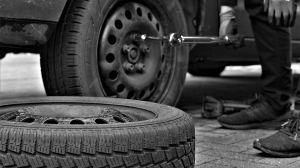
used tires being removed from a vehicle

Does Your Chevy Need New Tires?

It is vital to keep your car in good condition, and one service you should consider getting is new tires for your Chevy. If you haven't had them changed yet, now might be a good time! if you're hesitant about doing so, here are several signs you need to buy fresh tires at your Chevy dealer in Sallisaw, OK. Signs You Need to Buy New Tires at Your Sallisaw, OK Chevy Dealer Tread Depth Down to 2/32 of an Inch The tread on your tires should never be less than 1/16 of an inch (1.6 millimeters) deep. This is important to note since the deeper your tread is, the less likely you will get in a serious accident because of lousy traction. With a healthy tread, your car will grip the road better and will experience better traction. If you find yourself with tires that show shallow tread depth, it's high time to buy new ones. You See the Tread Wear Indicator Bar The treadwear indicator bar, also known as the TWI for short, is a thin piece of smooth rubber that runs across your tire. This acts as a visual reminder to get the tires changed. When more than two or three of these are apparent on a tire, it is a clear indicator that the tread is getting thin, and you have to head to your local dealer to have your tires replaced. more Your Tires Have Blisters The outer surface of the tire can weaken at times, resulting in blisters or a bulge that is prominently seen on the surface. This weak area on your tire can lead to a sudden burst. If you don't have your car serviced right away, you may find yourself in a world of trouble if the tire bursts while you're cruising on the interstate. To prevent a dire situation like this from ever happening, keep an eye out for tire blisters and bulges. Constant Shaking Shaking on unpaved roads is typical, but if your car shakes no matter how smooth the road, you may need to swap out your current tires for new ones. Shaking may indicate an issue with the tire's interior, but it can also be caused by poor alignment or balance. If you are experiencing this, it's best to bring your vehicle to your local dealer so that a professional can check your tires out. Cords Showing If the cords are already showing through the rubber of your tires, that is a pretty strong indicator that you need to buy new ones. You need to swap out the defective tire or tires as soon as possible as the continued usage of these is unsafe and can result in an accident. Failing Air Pressure If you notice that your tires are constantly losing air pressure, it could mean that you've lost their mounting seal or the valve stem has suffered damage. Other reasons for constant failing pressure could be the tire's age and punctures. Whatever the case may be, you should have your tires checked out by a professional. If you're not sure if your Chevy needs fresh tires, we're here to help! Contact Blue Ribbon Chevrolet Buick GMC today, and we'll help you find the perfect set of tires for your Chevy. Whether it's a new set, an upgrade, or just routine maintenance on what you already have, we can provide all that and more!
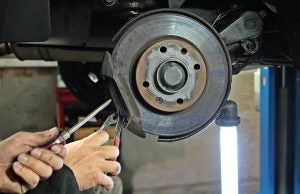
a car's breaks being repaired

5 Signs Your Chevy May Need a Brake Repair

If you are a Chevy owner, you know that brakes are one of the most important parts of your car. They keep you safe and help to stop the vehicle when needed. But what if your brakes start showing signs of wear or damage? You may need brake repair at your Chevy dealer in Sallisaw, OK sooner than later! Here are five signs to keep an eye out for. 1. Clicking Noise In some vehicles, the brake pads are firmly held in place by a specialized holder. In other cars, these are held in place with clamps, bolts, or pins. Regardless of the method used, the main objective behind these designs is to keep the brake pads from moving about. If they become unfastened, they will begin to rattle. When this occurs, you will then hear a clicking sound when the brake pedal is pressed or released. 2. Brake Fade Brake fade is a technique commonly used when driving down a mountain slope or along a twisting road. However, if you use this technique regularly, your braking system can get damaged. Components will get heated as a result of forcing the brake pads to make contact with the rotors for an extended duration. Eventually, their capacity to generate the appropriate friction against each other diminishes with time and you'll soon notice that your automobile won't stop as quickly as it once did. more 3. Nose Pulls to One Side Brake pads on your vehicle don't always wear down at the same rate. Those on one side may become thinner than those on the other from time to time. If this happens, the automobile may pull a little to the left or right as soon as you apply the brakes. And if you leave this issue unchecked, you'll put your steering rack under needless strain. This is a problem you shouldn't just put off. Bring your car to your local dealer and have a mechanic investigate the problem as soon as possible. 4. Brake Pedal Vibrates Is the brake pedal spontaneously shaking when you step on it? It's possible that your brake pads are to blame. A specific type of resin is used to keep the brakes together, and as each brake pad wears down, the adhesive becomes hot and is smeared across the rotor. It will then form an evenly distributed layer in ideal situations. However, if the resin isn't properly dispersed, the pads may overheat and as a result, your brake pedals can vibrate uncontrollably 5. Squealing Noise Most brake pads nowadays have built-in "wear indicators." The only function of these gadgets is to produce a piercing noise as the brake pad wears down to a critical level, scraping against the rotor. The distinct sound signals the driver that his or her present brake pads are in danger of completely disintegrating. If any one of these signs sounds familiar to you, contact Blue Ribbon Chevrolet Buick GMC today by giving us a call at 855-608-2021. You can also visit our showroom at 1701 S Kerr Blvd in Sallisaw, Oklahoma, and our friendly staff will tend to your automobile's needs.

a drawing of a car's engine

Does Your Chevy Need a Radiator Repair?

Your radiator is responsible for keeping your motor cool. When it begins malfunctioning, your motor begins overheating. This can result in serious damage to your motor. Luckily, if you pay attention to the warning signs, you can bring your vehicle in for a radiator repair at your local Chevy dealer before serious motor damage occurs. Here's what you need to know. Does Your Chevy Need a Radiator Repair at Your Local Chevy Dealer? There are several signs your radiator may be in need of a repair. Among these signs are white smoke coming out of your exhaust, a low coolant level, and an engine that is too hot. Here's a closer look. White Smoke Coming Out of Your Exhaust A clear sign that your radiator is in need of repair is white smoke coming out of your exhaust. Your exhaust will blow white smoke if you have coolant that has leaked into your combustion chamber. If you ignore this problem for too long, there won't be enough coolant to cool your motor. This will result in both radiator and engine damage. A Low Coolant Level You also may need work done on your radiator if your coolant level is low. Your coolant is very important for keeping your radiator operating efficiently and keeping your motor cool. It is advisable to check the coolant level in your reservoir monthly to catch leaks quickly. If your coolant level is low, add coolant to your vehicle before you drive it. If you don't have any extra coolant on hand, add water to the reservoir until you can buy some coolant. more An Excessively Hot Engine As stated previously, your radiator is designed to keep your motor cool. If your motor is overheating, there is something wrong with your radiator. This could be something as simple as a low coolant level. However, it also may be an indication of a much more serious problem that needs immediate attention. If your coolant level is fine, but your engine is getting too hot, schedule a service appointment right away. If your engine becomes too hot, turn the heat up in your car all the way immediately. This will take some of the load off of your radiator. As soon as it is safe to do so, pull your vehicle off of the road and turn it off. You should keep it off for at least 15 minutes to give your motor plenty of time to cool off. While your engine is cooling off, check your coolant reservoir to ensure there is enough fluid. If there's not, top it off. Sludge in Your Radiator Your coolant should be bright red, green, or yellow depending on the type of coolant you bought. If it looks rusty instead of bright, contaminants are building up in your radiator and forming sludge. This reduces the efficiency of your radiator significantly. There are several signs that indicate something wrong with your radiator, including a low coolant level, an excessive hot engine, and white smoke coming out of your exhaust. If you're noticing any of these signs, contact us right away at Blue Ribbon Chevrolet to schedule a service appointment. image via chevrolet.com

Contact Us

Fill out this form below and we'll contact you shortly
*Required Fields